
Will AI replace graphic designers? The short answer
No. AI will not replace graphic designers or UI/UX designers, but designers who think first and use AI second will replace those who let AI do their thinking. The strongest design process starts with the designer's own idea, shaped by the brief, the audience and the problem. AI comes in after that, for concept ideation and creative direction, to stretch and speed up an idea the designer already owns.
This is the real question behind the AI-in-design debate. It is not whether to use AI, but when. Used too early, AI becomes the starting point and the designer follows it. Used at the right moment, it becomes a powerful partner for a vision that is already human.
Why should designers think before using AI?
Designers should think before using AI because the first idea shapes everything that follows. If an AI tool produces the first idea, the designer edits the machine's direction instead of building their own. Thinking first keeps the creative vision, and the credit for it, with the designer.
1. The first idea anchors the whole design
Whatever you see first becomes the reference point. Open an AI tool before you have your own idea, and its output quietly sets the colours, layout and mood you then tweak. Start with your own sketch, and AI becomes a way to test and widen it.
2. Only the designer understands the brand's purpose
AI can generate visuals, but it does not know why the brand exists, who it serves or what it must say. A graphic designer who has studied the brief can set a direction grounded in the brand's purpose, audience and story.
3. Creative thinking is a skill you keep by using it
Designers who reach for AI at every blank page slowly lose the habit of generating ideas. Thinking first keeps creativity, problem-solving and critical thinking sharp, and those are the skills AI cannot supply.
4. Original ideas are what make a brand different
Your own idea carries your perspective and experience. That is the part no other designer, and no AI model trained on existing work, can produce in the same way.
The think-first design workflow: 4 steps
The think-first design workflow puts human ideation before AI ideation. It works for graphic design, branding and UI/UX design alike.
- Think and sketch on your own. Read the brief, study the audience and define the problem. Write down three to five rough ideas, a mood in words, or quick thumbnail sketches before opening any AI tool.
- Use AI for concept ideation and direction. Bring your ideas to AI and ask it to expand them: alternative visual directions, colour and type explorations, layout variations or wireframe options built on your starting point.
- Judge and choose the direction. Compare AI's options against the brief. Pick the direction that fits the brand and the people it serves, and be able to explain why in one sentence.
- Refine and finish in your own voice. Develop the chosen direction by hand so the final work carries the brand's personality, story and visual language, not a generic AI look.
The order matters more than the tools. Step 1 is what makes steps 2 to 4 original.
How should designers use AI for concept ideation and direction?
Use AI to expand an idea you already have, not to invent one from nothing. Give it your concept, your audience and your constraints, and ask for variations and directions you can judge.
Good ways to use AI in graphic design and UI/UX design
- Widen your concept: ask for several visual directions built from your own sketch or mood words.
- Explore colour and typography: test palettes and font pairings around a direction you have chosen.
- Generate layout and wireframe options: see alternative screen layouts for a user flow you have already mapped.
- Pressure-test ideas: ask AI what your concept might miss for a specific audience.
- Speed up repetitive work: resizing, format variations and production tasks once the creative direction is set.
Idea-first prompt vs AI-first prompt
| AI-first prompt (avoid) | Idea-first prompt (use) |
|---|---|
| "Design a logo for a fintech brand." | "I've sketched a logo built on an open door to show trust and access. Give me 5 visual directions for this idea in a warm, minimal style." |
| "Make a landing page for a fitness app." | "My concept is a calm, beginner-friendly fitness app. Suggest 3 layout directions for the home screen that keep the first action to one tap." |
The idea-first prompt gives AI your thinking to work from. The result is direction, not a replacement for your idea.
What is the risk of AI-first design?
The biggest risk of AI-first design is sameness. When designers start from AI output, brands drift toward the same typography, font pairings, colour palettes, layouts and visual styles.
Imagine every company using AI to create its brand identity. If everyone starts from similar tools, what makes one brand different from another?
Why differentiation matters in brand design
Differentiation is one of marketing's core goals. Every company wants a brand identity that people recognise, remember and connect with. That needs its own personality, story and visual language.
Efficiency is not the same as originality. AI makes design faster. A designer's own idea makes it distinct. Thinking first is how designers protect the originality a brand needs to stand out in a crowded market.
AI vs human designers: what does each do best?
Human designers own the idea, the reasoning and the final decision. AI is strongest at expanding, varying and speeding up an idea once a designer has set its direction.
| Stage of design | Human designer leads | AI supports |
|---|---|---|
| Understanding the brief | Brand purpose, audience, problem definition | Summarising research inputs |
| First idea | Original concept, sketches, point of view | Nothing yet: this stage is human-only |
| Concept ideation | Choosing which ideas to pursue | Concept directions, variations, moodboards |
| Visual direction | Final choice of colour, type and style | Palette, font-pairing and layout explorations |
| Production | Quality control and brand consistency | Resizing, formats, repetitive tasks |
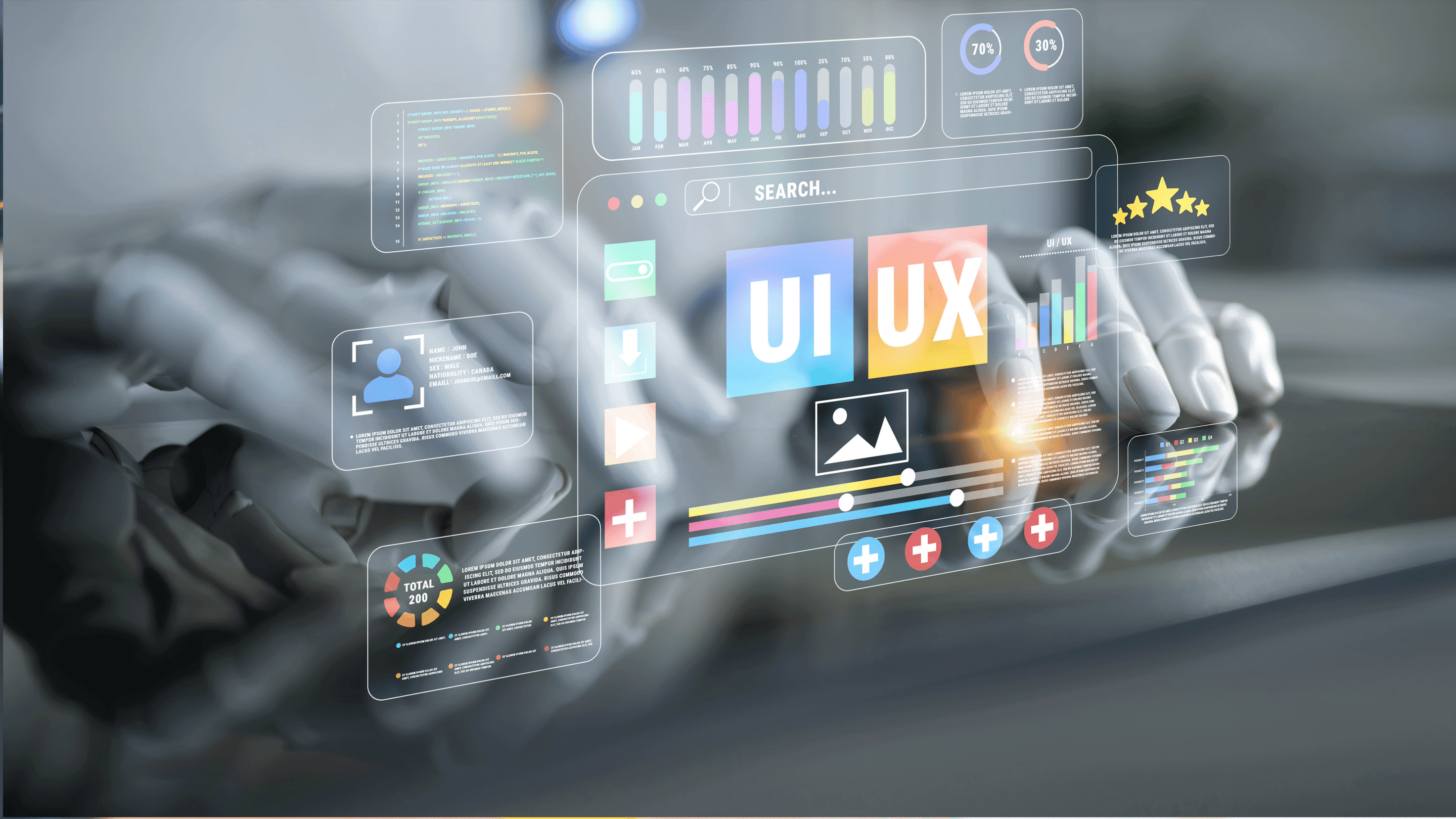
A graphic designer does not just choose colours and fonts. A UI/UX designer does not just arrange buttons and screens. Both make decisions based on research, empathy, strategy, context and the needs of real people. Design is about creating something meaningful, functional and memorable, not only visually appealing.
Will AI replace UI/UX designers?
No. AI will not replace UI/UX designers, because good user experience starts with understanding people, and that thinking has to happen before any tool is opened.
A UI/UX designer first defines the user's problem, maps the journey and decides what the experience should feel like. Only then can AI help, by generating wireframe options, screen variations and layout directions to compare. If AI generates the screens first, the design risks solving the wrong problem neatly.
Think-first UI/UX in practice
- Before AI: user research, personas, the core problem, the key user flow.
- With AI: wireframe variations, alternative layouts, microcopy options, faster prototyping.
- After AI: usability judgment, accessibility, and the final call on what serves real users.
Checklist: is your AI-assisted design still original?
Run through these six questions before you publish any design made with AI help.
- Did I form my own idea before opening an AI tool?
- Did I use AI to expand my concept, not to create it?
- Does the design reflect the brand's purpose, audience and message?
- Would people recognise it as this brand and not any other?
- Did a person choose the final direction, with a clear reason?
- Does it serve the needs of real users, not just look good?
Conclusion: think first, then use AI
So, will AI replace graphic designers or UI/UX designers? It may replace some of the tasks designers do today, but not the designer who thinks first. The value of a designer lies in why they create something, how they approach the problem and the unique perspective they bring.
The future of design is not a choice between AI and human creativity. It is a matter of order: your idea first, AI's ideation and direction second, your judgment last.
Think first to make your work original. Then use AI to make it faster.
FAQs about AI and designers
Will AI replace graphic designers?
No. AI can automate some design tasks, but it cannot replace a designer's own ideas, brand understanding and judgment. Graphic designers who think first and use AI second will stay in demand.
Will AI replace UI/UX designers?
No. UI/UX design starts with understanding users and their problems, which has to happen before any AI tool is used. AI then helps with wireframes, layout variations and faster prototyping.
Should designers think first or use AI first?
Think first. Form your own idea from the brief, the audience and the problem, then use AI for concept ideation and direction. Starting with AI makes its output your reference point.
How should designers use AI for concept ideation?
Give AI your own concept, audience and constraints, then ask for variations, visual directions and moodboards. Use the results to expand and test your idea, not to replace it.
What is the think-first design workflow?
It is a four-step process: think and sketch on your own, use AI for concept ideation and direction, judge and choose the best direction, then refine the final design in your own voice.
Why is AI-first design risky for brands?
When designers start from AI output, brands drift toward the same fonts, colours and layouts. That sameness weakens differentiation, which is what makes a brand recognisable and memorable.
What design tasks can AI handle well?
AI is useful for exploring visual directions, colour and typography options, layout and wireframe variations, resizing and other repetitive production work, once the designer has set the direction.
What skills should designers build to stay relevant in the AI era?
Strengthen independent ideation, research, empathy, strategy and critical thinking, and learn AI tools well enough to use them for ideation and direction after your own thinking is done.







Comments
0 comments
No comments yet
Be the first to add something to this.
Leave a comment