

Most transformation projects begin with a familiar question:
- Who can deliver this for us?
- Who can implement the platform?
- Who can migrate the workloads?
- Who can automate the processes?
- Who can build the new operating model?
- Who can provide the specialists?
- These are reasonable questions.
But there is another question enterprises should be asking much earlier: What will we be able to do ourselves when they leave?
Because a project can be delivered successfully and still leave the organization dependent on the people who delivered it.
The system works.
The milestones are complete.
The dashboards are green.
The vendor exits.
Then six months later, the enterprise needs to modify a workflow, onboard new talent, troubleshoot an unfamiliar problem or expand the capability into another business unit.
And suddenly the transformation feels much less complete.
That is the difference between project delivery and capability creation.
One gives the organization an outcome. The other improves its ability to keep producing outcomes.
The Project Model Has a Natural Expiry Date
Projects are designed to end. They have defined scopes, milestones, budgets, teams and closure dates. Capabilities are different.
A cloud capability does not end after migration. A ServiceNow capability does not end after implementation. An automation capability does not end when the first twenty workflows go live. An AI capability does not end after a successful pilot.
The enterprise still needs people who can operate, improve, govern and expand what was created. This is why the traditional project-vendor model can become limiting when applied to strategic transformation.
The vendor may have delivered exactly what the contract required. But if the enterprise has not built the capability to continue from there, the next change may require another project.
Then another.
Then another.
Transformation quietly becomes a sequence of external dependencies.
The Real Deliverable Is Bigger Than the Technology
Consider a major technology implementation.
The obvious deliverables might include: the platform; configured workflows; integrations; documentation; training; and transition support.
All are important. But sustainable transformation leaves behind something less visible:
people who understand the platform; owners who understand the processes; governance that can make decisions; operational teams that can resolve problems; knowledge that does not disappear with individuals; and a repeatable method for improving the capability over time.
Deloitte's research on digital operating models argues that transformation value depends partly on organizational choices around ownership, team capabilities and how organizations close capability gaps, rather than technology investment alone.
That changes how we should think about a transformation partner.
The question is no longer only: Can they build it?
It becomes: Can they help us become capable of owning it?
Knowledge Transfer Is Not Enough
Most project contracts already contain some form of knowledge transfer.
There may be documentation. Training sessions. Runbooks. Recorded walkthroughs. Handover meetings. All useful. But documentation is not the same as capability.
A team can receive a 200-page runbook and still struggle when the first unfamiliar production problem appears.
Real capability develops when internal teams participate in the work itself. They observe decisions. They solve problems. They make mistakes in controlled environments. They understand why the architecture was designed a particular way. They gradually take ownership while experienced specialists remain available to guide them.
That is closer to knowledge absorption than knowledge transfer.
McKinsey's implementation approach similarly combines transformation execution with capability building so organizations can sustain change after external teams leave. The distinction matters.
Knowledge transfer asks: “Did we explain it?”
Capability building asks: “Can they now do it?”
Build With the Client, Not Only for the Client
A capability-led transformation therefore looks different from a conventional project.
Instead of an external team designing everything behind closed doors and handing it over at the end, ownership changes progressively.
A simple model might look like this:
Stage 1: Partner-Led
External specialists establish the architecture, processes, governance and initial delivery capability. Internal teams observe and participate.
Stage 2: Jointly Operated
Internal employees begin owning defined areas while partner specialists coach, review and provide escalation support.
Stage 3: Enterprise-Led
Internal teams lead delivery and operations. External specialists remain available primarily for complex problems, specialist expertise or new capability development.
Stage 4: Independently Scalable
The enterprise can operate the capability, onboard people, improve processes and expand it without rebuilding the dependency that existed at the beginning.
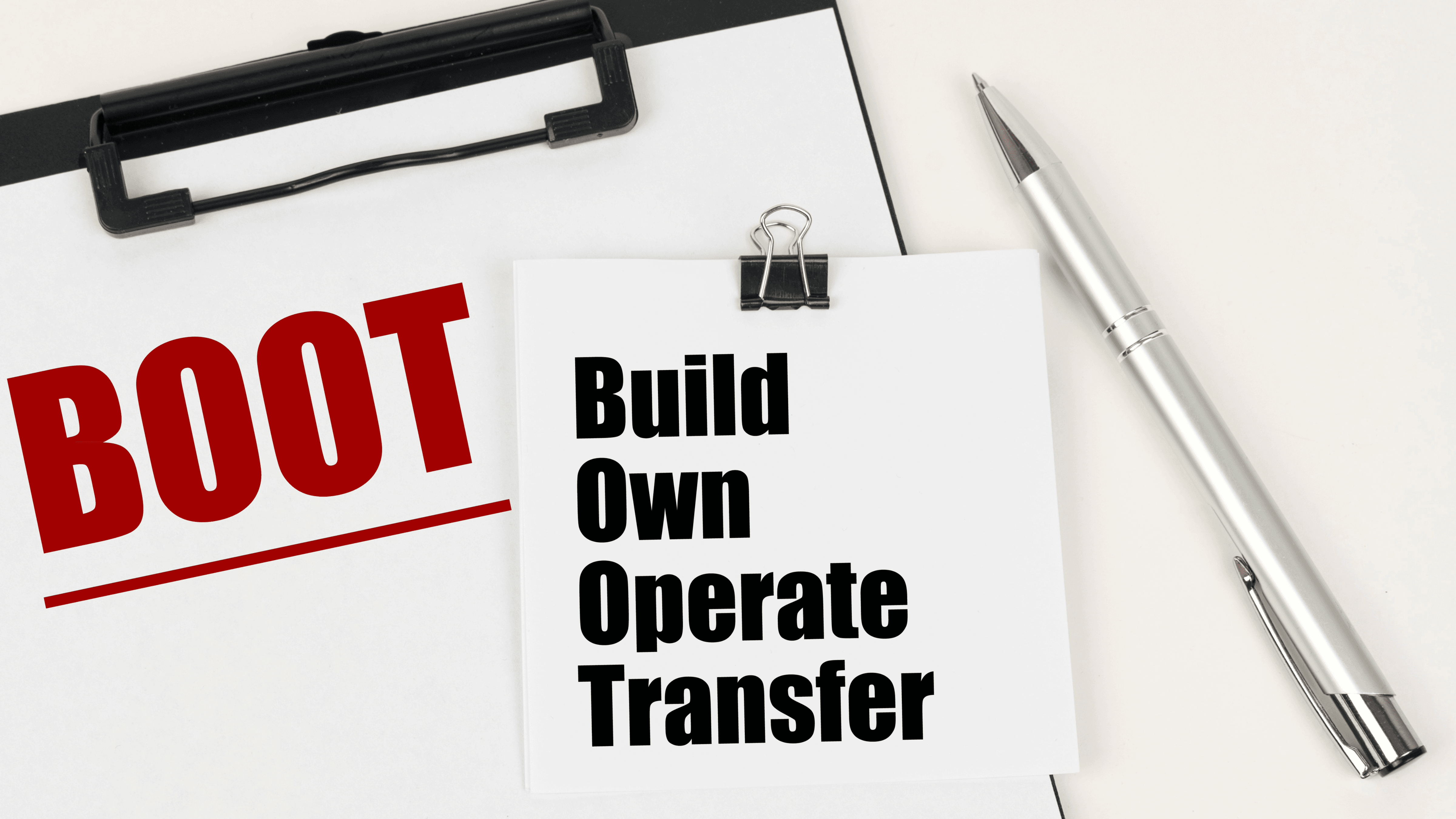
This principle is visible in Build-Operate-Transfer models as well. Deloitte describes newer BOT approaches as increasingly focused on talent and high-value capabilities, with the operating model and team developed before transfer to the enterprise.
The objective is not to eliminate partners. It is to change what the enterprise needs them for.
A Good Partner Should Eventually Make Some of Its Own Work Unnecessary
That sounds commercially counterintuitive. But strategically, it is important.
If a provider remains valuable only because the client never learns to operate without it, that is dependency, not partnership.
A mature relationship evolves.
At the beginning, the enterprise may need execution capacity. Later, it may need specialist guidance. Then architecture. Innovation. Optimization. New technology. New markets. New capabilities.
The partner continues creating value, but the value moves upward. Instead of repeatedly selling the client the same operational dependency, it helps the client solve the next problem. That creates a healthier long-term relationship.
Measure What Remains After the Project
This also suggests a different transformation scorecard. Alongside the usual measures of timeline, budget, quality and scope, enterprises can ask:
Capability ownership: How much can internal teams now operate independently?
Knowledge retention: Is critical knowledge institutionalized or still concentrated in external specialists?
Talent readiness: Are people available with the skills required to sustain the capability?
Operational maturity: Are governance, escalation, monitoring and decision-making mechanisms working without project intervention?
Improvement capacity: Can the enterprise enhance the solution after go-live without launching another major dependency?
Time to independence: How quickly is responsibility moving from external specialists to enterprise teams?
These metrics reveal something a project closure report cannot. They tell leadership whether the organization itself became stronger.
Technology + Talent + Operating Model
This is why capability building cannot sit only with IT.
Technology alone does not create an enterprise capability. Neither does training alone.
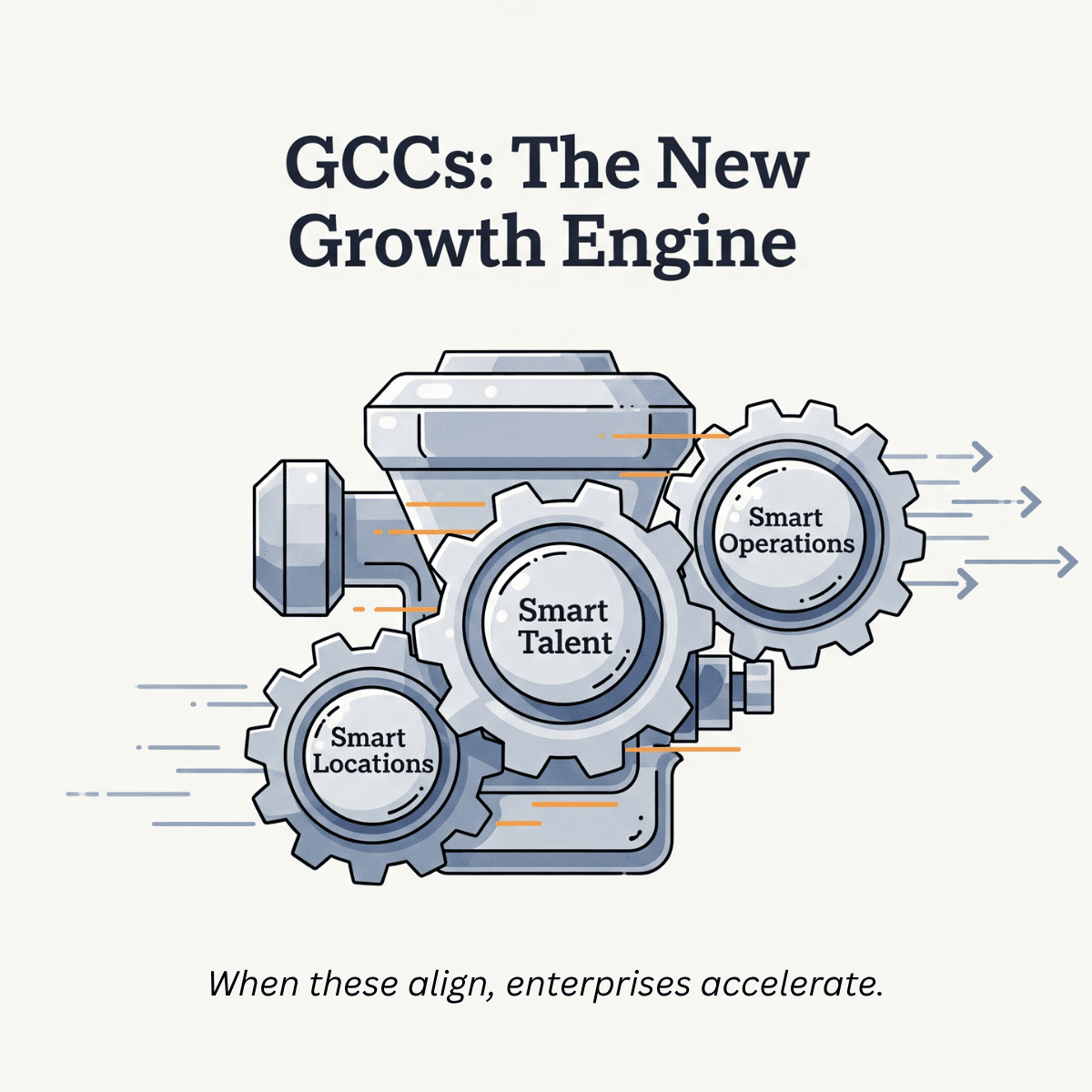
A sustainable capability requires three elements working together:
Technology: The platforms, automation, architecture and tools.
Talent: People with the technical and professional skills required to operate and improve them.
Operating Model: Governance, ownership, processes, decision rights and performance management.
Remove any one of the three and the transformation becomes fragile.
Deloitte's work on operating-model transformation similarly emphasizes clear ownership, governance, knowledge exchange and team capabilities as important elements in sustaining digital change.
This is why CEOs, CIOs, COOs and CHROs all have a stake in the same transformation.
One cannot build the technology while another separately tries to find the people and a third later invents the operating model. They are parts of the same capability.
In Conclusion
Enterprises will always need external partners.
Technology changes too quickly, specialist skills are too diverse and transformation programmes are too complex for every capability to be built entirely in-house.
The question is not whether to use partners. It is what kind of dependency the partnership creates.
A project vendor delivers what was agreed. A capability partner should go further.
It should help build the technology, develop the people, establish the operating discipline, transfer ownership and leave the organization more capable than it was before the engagement began.
Because the real test of transformation does not happen during the final steering committee. It happens later.
When the consultants have left. When the project team has disbanded. When the next problem appears. And the organization discovers whether it has to call the same people back to solve it.
The strongest transformation does not simply leave behind a solution.
It leaves behind an organization capable of owning what comes next.
FAQs
1. What is the difference between project delivery and capability building?
Project delivery focuses on completing defined scope, milestones and outputs. Capability building additionally develops the people, knowledge, governance and operating mechanisms required for the organization to sustain and improve those outputs after the project ends.
2. Does capability building mean enterprises should stop using external vendors?
No. External partners remain valuable for specialist expertise, innovation, transformation and flexible capacity. The objective is to avoid unnecessary long-term dependency for capabilities the enterprise strategically wants to own.
3. Why is traditional knowledge transfer often insufficient?
Documentation and training transfer information, but capability requires practical experience. Internal teams need opportunities to participate in delivery, make decisions, solve problems and gradually assume responsibility.
4. How can enterprises measure whether capability has actually been transferred?
Useful measures include internal ownership, time to independence, reliance on external specialists, readiness of internal talent, knowledge coverage, operational performance and the organization's ability to make changes independently.
5. What should enterprises expect from a capability-led transformation partner?
Beyond technical delivery, the partner should help establish governance, develop internal talent, institutionalize knowledge, create repeatable operating processes and progressively transition ownership to the enterprise where that is the intended model.





Comments
0 comments
No comments yet
Be the first to add something to this.
Leave a comment